Hello everybody, welcome to our recipe page, If you're looking for recipes idea to cook today, look no further! We provide you only the best Eggless Buns using the Japanese Tangzhong Technique recipe here. We also have wide variety of recipes to try.
Before you jump to Eggless Buns using the Japanese Tangzhong Technique recipe, you may want to read this short interesting healthy tips about The Basics of Being Healthy.
We all understand that, in order to really be healthy, nutritious and balanced meal plans are important as are good amounts of exercise. Sadly, there isn’t constantly enough time or energy for us to really do the things we need to do. When our work day is finished, most people do not wish to go to the gym. People crave sweets and salts, not veggies (unless they are vegetarians). You should be glad to learn that getting healthy doesn’t always have to be super hard work. If you are conscientious you’ll get all of the activity and appropriate food choices you need. Here are some hints to be as healthful as possible.
Consider the stairs. Stroll up the stairs to where you live or work as opposed to using the elevator. While this will be tough to do if you live on or if your job is on a seriously high level floor in a skyscraper, taking the stairs to a home or office on, say, the fifth floor is entirely do-able. Even if you do live or work on one of the top floors, you can still get out of the elevator early and climb up the stairs the rest of the way. So many people pick the elevator over climbing even a single flight of stairs. Even just a individual flight of stairs, when travelled up or down a few times a day–can be a great boost to your system.
There are a good deal of things that contribute to your getting healthy. Not all of them require fancy gym memberships or restricted diets. It is the little things you choose on a daily basis that really help you with weight loss and getting healthy. Make shrewd choices every day is a great start. Getting as much physical exercise as possible is another factor. Remember: being healthy and balanced isn’t just about slimming down. You really want your body to be powerful too.
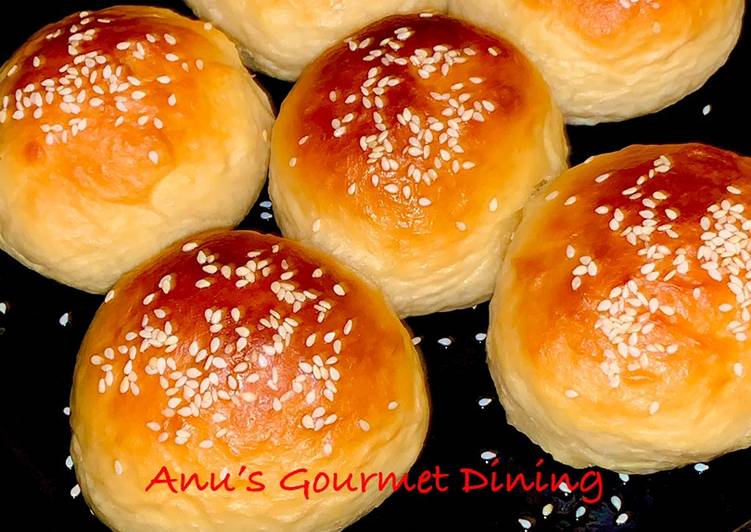
We hope you got insight from reading it, now let’s go back to eggless buns using the japanese tangzhong technique recipe. To make eggless buns using the japanese tangzhong technique you need 14 ingredients and 21 steps. Here is how you do that.
The ingredients needed to prepare Eggless Buns using the Japanese Tangzhong Technique:
- You need (A) For the Roux:
- Prepare 1 Tbsp All Purpose Flour/Maida
- You need 60 ML (1/4th cup) Milk
- Take (B) For the Dough:
- Provide 250 grams (2 cups) All Purpose Flour
- Use 1 Tsp (5 Grams) Salt
- Provide 25 Grams (2 Tbsp) Granulated Sugar 16 Grams (2 Tbsp) Milk Powder
- Get 2 Teaspoons (10 Grams) Active Dry Yeast
- Provide 120 ML (1/2 cup) Water Or Milk if you don’t have milk powder
- Use 28 Grams (2 Tbsp) Butter (Softened)
- Provide (C) For Brushing & Garnish:
- Use As required Milk (At room temperature)
- Take As required Melted Butter
- Take As required White Sesame Seeds
Instructions to make Eggless Buns using the Japanese Tangzhong Technique:
- About the Tangzhong Technique:
- This Japanese technique cooks a small percentage of the flour and liquid (water or milk) in a yeast recipe very briefly before combining the resulting thick slurry with the remaining ingredients.
- How does this technique affect yeast dough? It pre-gelatinizes the starches in the flour, meaning they can absorb more water. In fact, flour will absorb twice as much hot water or milk as it does the cool/lukewarm water or milk you'the usually use in yeast dough.
- Not only does the starch in the flour absorb more liquid; since heating the starch with water creates structure, it's able to hold onto that extra liquid throughout the kneading, baking, and cooling processes.
- Which in turn means: - - Since there's less free (unabsorbed) water in the dough, it's less sticky and easier to knead;
- The bread or rolls may rise higher, due to more water creating more internal steam (which makes bread rise in the oven along with the carbon dioxide given off by the yeast);
- Having retained more water during baking, bread and rolls will be moister, and will stay soft and fresh longer.
- Method:
- (A) To make the Roux: - - Place 1 Tablespoon All Purpose Flour in a small pan over low to medium heat.
- Add 60 Ml Milk gradually. Keep stirring continuously until the mixture turns sticky/gluey.
- Transfer the Roux in a small bowl. - Cover it with a cling wrap touching the Roux to avoid skin formation. Let it cool down completely.
- (B) To make the Dough: - - Take 1/2 cup lukewarm water in a small measuring cup or bowl. Add the Sugar & Yeast. Stir gently & let it rest for about 10 minutes. The mixture should be frothy. If it doesn’t froth, that means the Yeast is old/expired. - Note: If you do not have Milk Powder, replace the water with lukewarm milk.
- Combine 2 Cups flour, Milk Powder, Salt & Sugar in a large mixing bowl. Set aside. - (If you have a Stand Mixer, please use that).
- Make a well in the middle of the dry flour mixture. Add the Roux followed by the Yeast mixture. - Knead the dough to a smooth ball. - Add 2 Tablespoons softened Butter when there’s no dry flour left. Keep kneading until you get a neat & smooth ball.
- Lightly grease a large mixing bowl. - Transfer the dough into it. Grease the dough as well. Cover tightly with a cling wrap. Leave it in a warm place for proofing. Let it double in size. Should be done in about an hour.
- Tip for quick proofing: Preheat the oven at 350 Degrees F for 2 minutes. Turn it off & keep the tightly covered dough in the oven until it doubles in volume.
- When the dough doubles in volume, punch it down a couple of times to release air bubbles. - - Divide the dough into 6 equal portions. About 80 grams each. - Make smooth balls tucking the creases neatly in the bottom.
- Place the balls on a baking tray lined with parchment paper or just grease it lightly. - You may use a lightly greased cast iron pan large enough to allow the buns to expand.
- Cover with a samp clean cloth or loose cling wrap. Leave it for a 2nd proofing for about an hour or so. - - Brush with Milk lightly. Sprinkle Sesame Seeds.
- Preheat oven at 375 Degrees F/190 Degrees C. - Bake for 15 minutes. - The Buns should sound hollow when tapped at the bottom.
- Take the Buns out of the oven. Brush with melted Butter. - - Enjoy warm with softened Butter. - - Happy Baking!
If you find this Eggless Buns using the Japanese Tangzhong Technique recipe helpful please share it to your friends or family, thank you and good luck.